La marimba is the national instrument of Costa Rica, and in my recent travels there, it was my joy to witness some of the musical heritage of the country. The marimba, while it is a symbol of both Mexico and Central America today, has no concrete origin. The strongest theory suggests that the instrument was created in Africa and spread to parts of Asia. It was only during the transatlantic slave trade that the instrument began to spread to the Americas, mixing African and Mesoamerican cultures. However, the marimba’s presence in Costa Rica dates to 1785 where a document mentioning the instrument was found in a church located in the city of Cartago.
The process of making a marimba is one that requires immense tuning skill along with woodworking. The marimba is an idiophone, meaning that it is a type of percussion instrument that produces sound by vibrating the instrument rather than strings or airflow. Other idiophones are gongs, symbols, and xylophones. Because of this, the nature of the marimba’s sound can be tied to the wood that is used to create it. In Costa Rica, this wood comes from the Cristobal tree and the Guaitil tree. The endangered nature of these trees later led to the creation of a “marimba forest”, also known as “El Bosque la Marimba”. This forest allows for the wood to be grown and used in marimba making in a sustainable fashion.
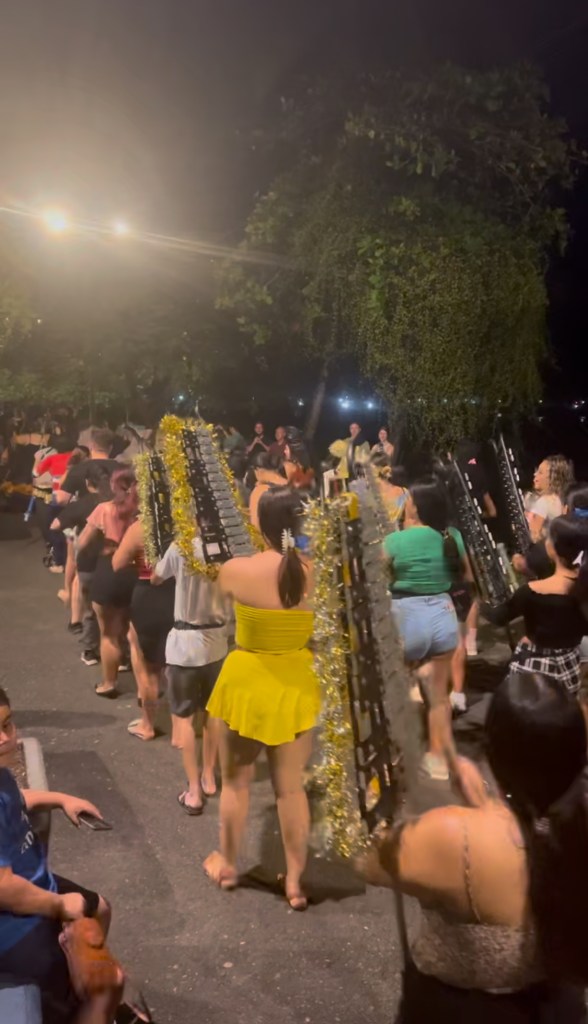
While my experience with the instrument may not have involved a professional or the highest quality of instrument, it is no less genuine. On a walk, I encountered a holiday parade taking place by the water in the town of Quepos. This parade featured all sorts of percussion such as drums and the marimba, as well as dancers. The music being played was all holiday themed and had been adapted for the instruments at hand. Most of the parade’s participants were high school students and I found that it was an amazing thing to see youth partaking in the cultural and holiday tradition of spreading cheer with la marimba.
 The Sound Effect
Leave a comment